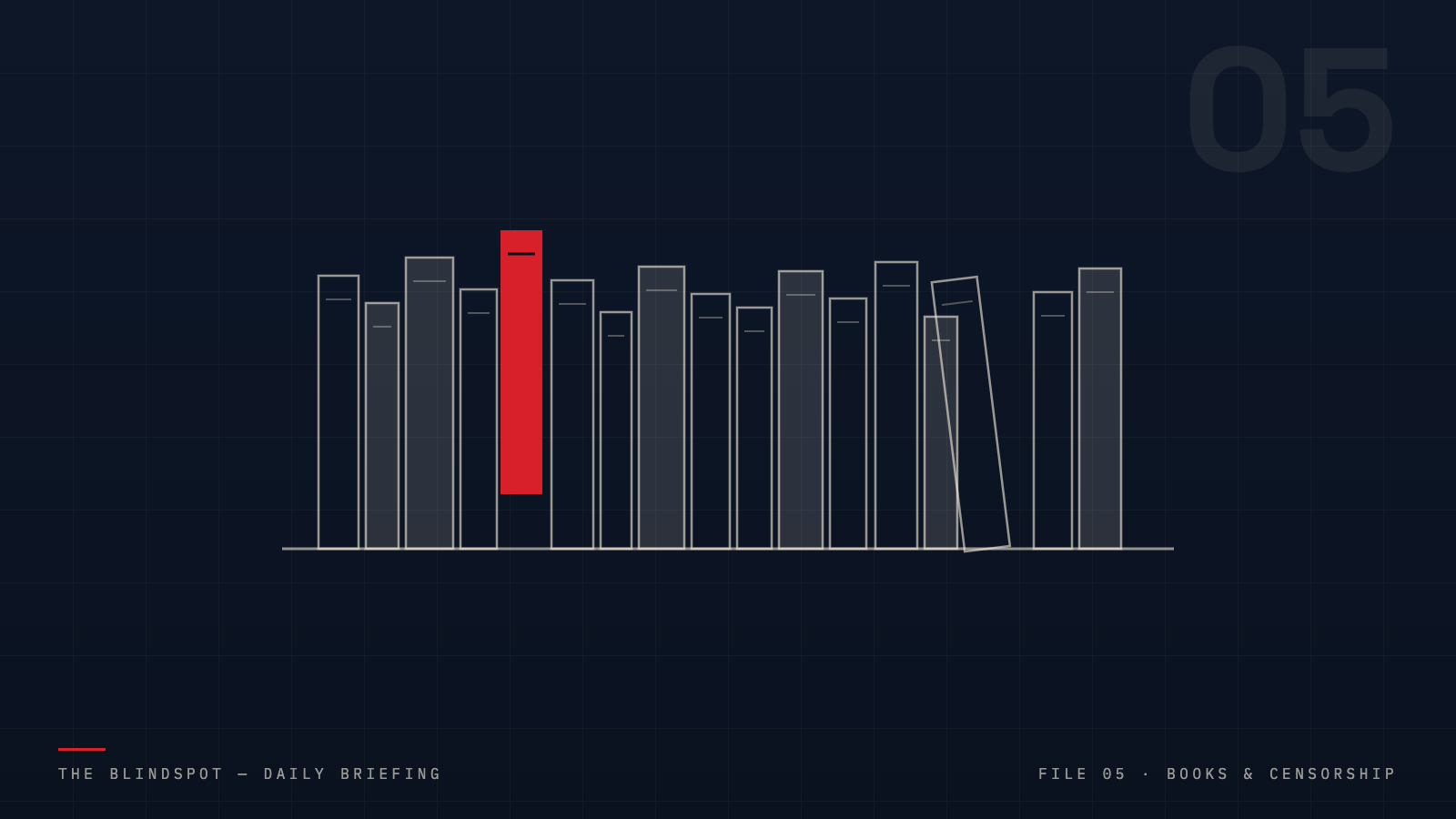
On July 15, the opening day of the Hong Kong Book Fair, national-security police raided two independent bookstores — Have a Nice Stay and Greenfield — and arrested five people under the sedition provisions of the Safeguarding National Security Ordinance, the security law the city enacted in 2024. It was the third such operation against independent booksellers in four months.
Among the allegedly seditious titles was the Chinese edition of “Let Only Red Flowers Bloom,” NPR correspondent Emily Feng’s study of identity and belonging in Xi Jinping’s China, published in Taiwan. One of the detained was photographed in a T-shirt reading “I am a bookstore employee.” The image crossed the strait within days: the sentence became a slogan on Taiwanese social media, and the book the raid targeted climbed to the top of Taiwan’s bestseller lists — advertised, in effect, by the police action against it.
Samizdat meets the algorithm
The old pattern is well documented. In the Soviet bloc, suppression created its own publishing industry: carbon copies on onion-skin paper, manuscripts passed hand to hand, the state in full control of the presses and in no control of the appetite. Scarcity worked as advertising then too. But the censors of that era could at least count on containment — a banned book’s audience grew slowly, secretly, and locally.
The update is speed and geography. A raid is now a global publicity event within a single news cycle, and the algorithm manufactures precisely the international audience the authorities were trying to prevent — abroad. At home the effect is the opposite and entirely traditional: shops close, charges accumulate, colleagues learn the lesson and quietly thin their shelves. Both things are true at once, which is what makes the moment hard to score. Suppression is losing the argument and winning the territory.
Notice, too, the mechanism doing the quietest work: there is no list. Hong Kong’s remaining independent booksellers operate without any published register of which titles cross the national-security line. The vagueness is not an oversight; it is the instrument. A named list can be complied with. An unnamed one must be guessed at, and guessing produces the broadest possible caution. Every shelf becomes a wager.
There is a precedent for where this goes. In 2015, five men connected to Causeway Bay Books — a Hong Kong shop specializing in gossipy titles about Beijing’s leadership — disappeared into mainland custody; one of them, the Swedish citizen Gui Minhai, was later sentenced to ten years in prison. The store itself reopened in 2020, in Taipei. The current campaign in Taiwan — the shirts, the bestseller lists, the editorials — is the next round of the same migration. What to watch is whether Taiwan’s publishing industry formally absorbs Hong Kong’s exile role, and whether a sentence printed for a shift at work — “I am a bookstore employee” — keeps its second life as the region’s shortest press-freedom manifesto.