
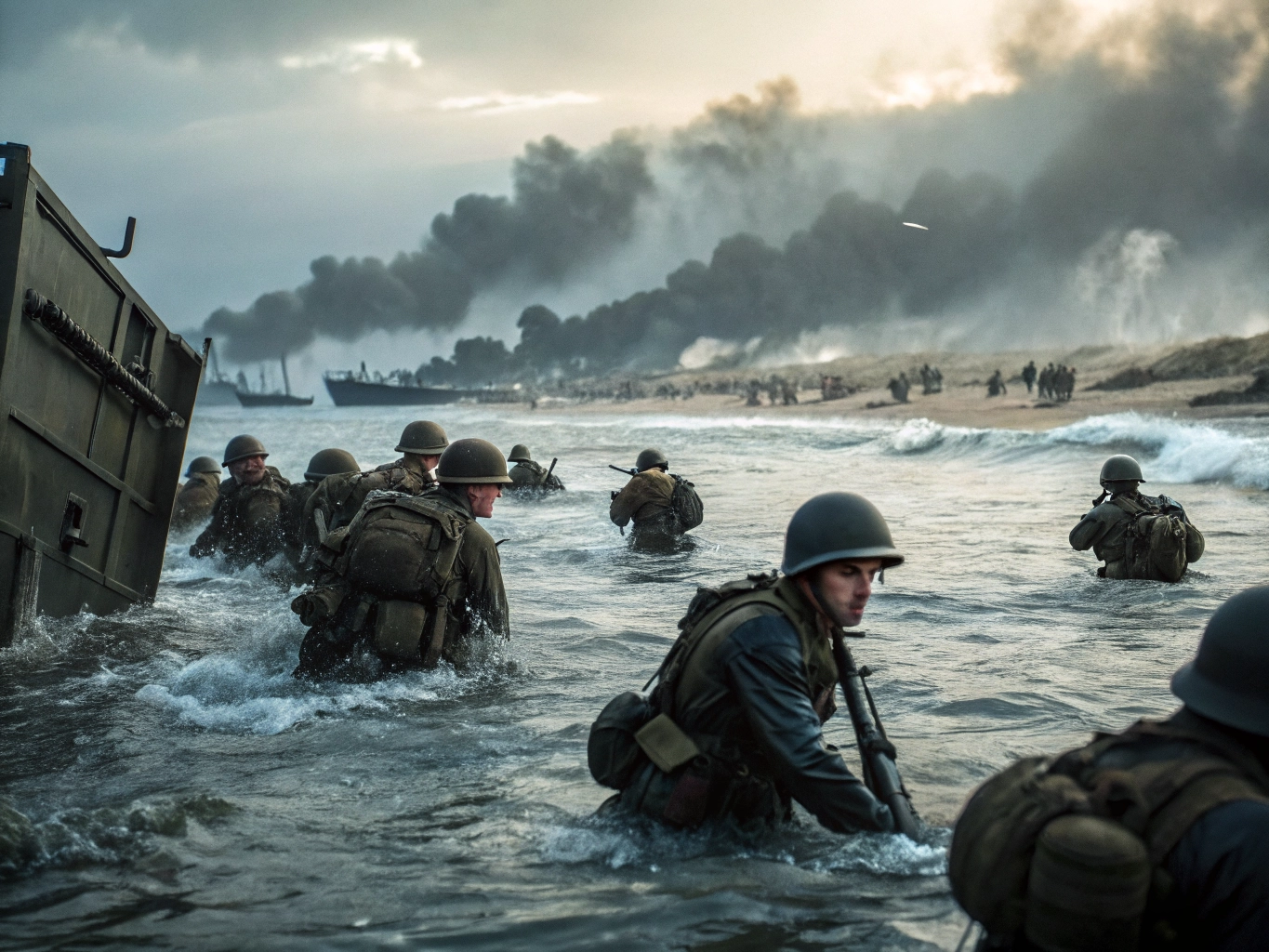
Omaha Beach survives in public memory as a scene of grim but inevitable victory. That is the version most nations prefer: sacrifice, courage, a line of men moving through fire, and the eventual turning of history. But the closer one gets to the first wave, the less inevitable the story becomes.
The accounts gathered after D-Day describe something harder to absorb. Units landed in the wrong places. Men entered water deeper than expected while carrying equipment that could pull them under. Command structures broke apart in minutes. Some companies were effectively destroyed before they could contribute to the fight for the high ground. The map later made sense of the landing, but the men inside it did not experience a map. They experienced water, smoke, wrong bearings, dead officers, and the sudden disappearance of the plan.
That is the blind spot in many victory narratives. The ending becomes so dominant that the middle is cleaned up to match it. A battle that nearly collapsed becomes a lesson in resolve. A sequence of errors becomes destiny. Individual survival, often dependent on chance, gets folded into institutional success.
None of this diminishes Omaha Beach. It does the opposite. It restores the scale of what was endured by refusing to make the story too neat. The men in the first wave were not walking through a legend. They were trapped inside a disaster that only later became part of a triumph.
The honest version of victory is often less comforting than the official one. It asks us to remember that history does not happen with the clarity it later acquires. It happens in confusion first. Only afterward do institutions decide how much confusion they are willing to preserve.
Source and image note
This essay is an original Blindspot treatment based on S. L. A. Marshall’s First Wave at Omaha Beach, published in The Atlantic in November 1960. The supplied Omaha Beach image appears to be a Getty Images rights-managed image, editorial number 625258854, so it has not been used here without confirmed rights.